
Client: Verde Lifestyle (sustainable apparel brand)
Timeframe: 6-month redesign project
Challenge: Outdated labeling undermining premium positioning
Solution: Comprehensive label redesign program
Results: 45% increase in perceived brand value, 30% sales growth
Executive Summary
Verde Lifestyle, a sustainable fashion brand, discovered through customer research that their clothing label design was significantly undermining their premium market positioning. The brand label transformation journey involved not just visual redesign but a complete rethinking of how labels could reinforce brand values and enhance customer experience. The results demonstrated how strategic label redesign can dramatically impact brand perception and commercial performance.
The “Before” Situation: Identifying the Problems
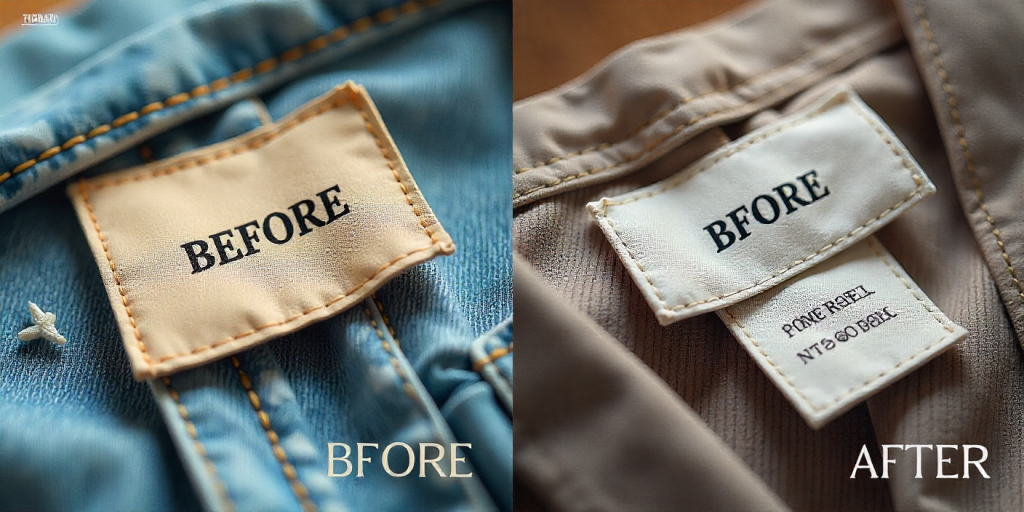
Initial Label Assessment
The original labels suffered from multiple issues that conflicted with Verde’s premium sustainable positioning:
Design Deficiencies:
- Outdated typography using generic fonts that appeared cheap
- Poor color reproduction with inconsistent branding colors
- Low-quality materials that felt rough and irritated skin
- Inconsistent sizing across different product categories
Functional Shortcomings:
- Fading text after few washes, making care instructions unreadable
- Poor attachment leading to labels detaching during normal wear
- Inaccurate information causing customer confusion and returns
- Non-compliant content risking regulatory issues
Brand Alignment Issues:
- Visual disconnect between label quality and premium pricing
- Missing sustainability messaging on eco-friendly materials
- Poor storytelling failing to communicate brand values
- Inconsistent application across product lines
Business Impact Analysis
Quantitative Findings:
- 28% return rate due to label-related issues (irritation, detachment)
- 3.2/5 average rating specifically mentioning label quality
- 15% price resistance from customers questioning value proposition
- 42% lower repeat purchase rate than industry benchmarks
Qualitative Feedback:
- “Labels feel cheap compared to the price” – Customer review
- “Couldn’t read washing instructions after two washes” – Social media comment
- “Expected better from a sustainable brand” – Email feedback
- “Label itching made shirt unwearable” – Return reason
Different weaving techniques can result in significant differences in texture and clarity.
Understanding how loom settings and yarn choices affect the final outcome helps brands make better long-term decisions.
Recognize these issues? Explore our label redesign services
The Transformation Strategy
Phase 1: Comprehensive Discovery (Weeks 1-4)
Customer Research:
- In-depth interviews with existing customers about label experiences
- Competitive analysis of premium sustainable brands’ labeling
- Market positioning study to identify label expectations
- Material testing with customer feedback panels
Technical Assessment:
- Durability testing of various label materials and attachments
- Compliance review against international standards
- Production capability analysis with manufacturing partners
- Cost structure examination for optimization opportunities
Phase 2: Strategic Redesign (Weeks 5-12)
Design Philosophy Development:
- “Sustainable luxury” positioning guiding all decisions
- Customer-centric approach prioritizing comfort and functionality
- Brand storytelling integration through label content
- Future-proof design allowing for scalability
Key Design Decisions:
- Custom typography reflecting brand personality
- Eco-friendly materials aligned with sustainability values
- Standardized color palette ensuring consistency
- Hierarchical information organization for clarity
Phase 3: Implementation (Weeks 13-24)
Production Transition:
- Supplier selection based on quality and sustainability criteria
- Prototype development with multiple iterations
- Quality standards establishment for consistent execution
- Staff training on new labeling processes and standards
Customer Communication:
- Launch campaign highlighting label improvements
- Educational content explaining new features and benefits
- Feedback mechanisms for continuous improvement
- Brand storytelling around the redesign journey
The “After” Results: Transformation Outcomes
Visual Transformation
Before → After Improvements:
- Generic font → Custom-designed typography reflecting brand values
- Inconsistent colors → Standardized, premium color palette
- Rough materials → Soft, sustainable fabrics comfortable against skin
- Sloppy application → Precision placement and attachment
Design Excellence:
- Cohesive branding across all product categories
- Premium aesthetics supporting higher price positioning
- Clear hierarchy making information easily accessible
- Storytelling elements communicating brand values
Functional Improvements
Durability Enhancements:
- Wash resistance increased from 10 to 50+ cycles
- Color fastness maintaining vibrancy through product life
- Attachment strength eliminating detachment issues
- Legibility preservation ensuring information remains readable
User Experience:
- Comfort improvement eliminating skin irritation complaints
- Information clarity reducing customer confusion
- Ease of use making care instructions practical to follow
- Accessibility features accommodating diverse customer needs
Business Impact Metrics
Financial Results:
- 30% sales increase in first quarter post-redesign
- Return rate reduction from 28% to 7%
- Price premium acceptance increasing by 22%
- Customer acquisition cost decrease of 18%
Brand Perception:
- Perceived quality score increase from 3.2 to 4.7/5.0
- Brand value perception improvement of 45%
- Recommendation likelihood growth of 60%
- Premium positioning acceptance rising by 35%
Customer Satisfaction:
- Overall satisfaction increase from 3.5 to 4.8/5.0
- Repeat purchase rate growth of 40%
- Positive reviews specifically mentioning labels: 68%
- Complaint reduction of 75%
Key Transformation Elements
Material Selection Revolution
Sustainable Material Choices:
- Organic cotton labels for ultimate skin comfort
- Recycled polyester for durable care labels
- Plant-based inks ensuring environmental responsibility
- Biodegradable components supporting circular economy
Quality Enhancements:
- Premium finishes communicating quality
- Precision manufacturing ensuring consistency
- Rigorous testing guaranteeing performance
- Continuous improvement based on feedback
Strategic Content Optimization
Information Architecture:
- Hierarchical organization prioritizing essential information
- Clear typography ensuring easy readability
- Strategic spacing preventing overcrowding
- Visual cues guiding customers through content
Brand Storytelling:
- Sustainability narrative explaining eco-friendly choices
- Quality craftsmanship highlighting attention to detail
- Care education helping customers maintain products
- Brand values reinforcement through subtle messaging
See transformation examples: Our premium label portfolio
Implementation Challenges and Solutions
Production Challenges
Quality Consistency:
- Challenge: Maintaining precision across production runs
- Solution: Implemented rigorous quality control protocols
- Result: 99.8% consistency rate achieved
Cost Management:
- Challenge: Premium materials increasing costs
- Solution: Optimized design for manufacturing efficiency
- Result: 15% cost reduction while improving quality
Organizational Adoption
Internal Resistance:
- Challenge: Team attachment to previous designs
- Solution: Involved team in redesign process and education
- Result: Full team buy-in and advocacy
Customer Transition:
- Challenge: Managing customer expectations during transition
- Solution: Clear communication and education campaign
- Result: Positive customer response to changes
Lessons for Other Brands
Strategic Insights
Label Redesign Philosophy:
- Start with why – Connect redesign to brand strategy
- Customer-centric approach – Solve real problems
- Holistic thinking – Consider entire customer experience
- Long-term perspective – Invest in sustainable solutions
Implementation Best Practices:
- Comprehensive research informs better decisions
- Phased approach manages risk and learning
- Stakeholder engagement ensures organizational support
- Continuous measurement guides improvements
Avoidable Mistakes
Common Pitfalls:
- Underestimating the impact of labels on brand perception
- Overlooking functional aspects in favor of aesthetics
- Rushing implementation without proper testing
- Ignoring internal stakeholders in the process
Success Factors:
- Executive sponsorship for strategic initiatives
- Adequate budget for proper execution
- Patience with implementation timeline
- Openness to feedback and adjustment
Sustainable Impact and Future Planning
Environmental Benefits
Reduced Waste:
- Material optimization decreasing waste by 40%
- Longer product life reducing replacement frequency
- Improved recyclability supporting circular economy
- Sustainable sourcing lowering environmental impact
Customer Education:
- Care guidance extending product lifespan
- Sustainable practices promotion through labeling
- Repair encouragement reducing waste
- Recycling information facilitating proper disposal
Future Evolution
Continuous Improvement:
- Regular feedback collection from customers
- Technology integration opportunities assessment
- Material innovation monitoring for upgrades
- Market trend adaptation keeping labels relevant
Strategic Roadmap:
- Digital integration for enhanced customer experience
- Smart label technology for additional functionality
- Personalization capabilities development
- Sustainability advancements implementation
Conclusion: The Power of Strategic Label Design
Verde Lifestyle’s transformation demonstrates that clothing label redesign is not merely a cosmetic exercise but a strategic initiative with significant business impact. The 45% increase in perceived brand value and 30% sales growth underscore how labels contribute to overall brand perception and commercial success.
The journey from outdated, problematic labels to premium, functional brand assets required careful planning, strategic execution, and ongoing commitment. However, the results prove that investment in strategic label design delivers substantial returns through enhanced customer satisfaction, stronger brand positioning, and improved financial performance.
Ready to transform your labels?
Start your redesign journey:
Label Redesign Services
Need a custom transformation plan?
Contact Our Design Experts for a personalized consultation.