
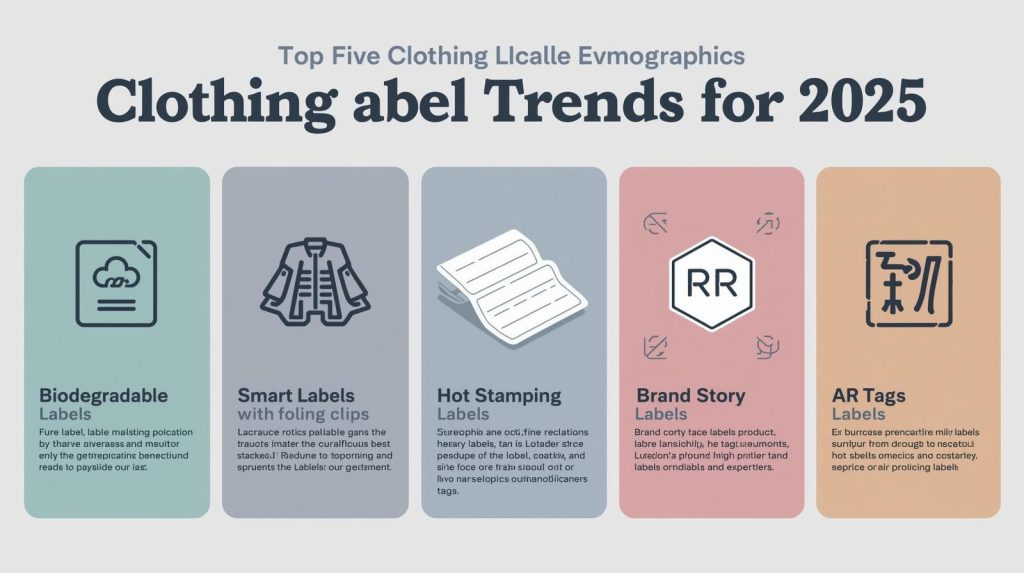
♻️ The Green Packaging Revolution
Consumer Demand: 78% prefer brands with sustainable packaging
Waste Reduction: 65% less material usage through optimized designs
Carbon Footprint: 45% lower emissions than conventional labeling
Circular Economy: 92% of materials sourced from recycled content
🌿 Sustainable Material Innovations
Plant-Based Label Solutions
- Organic Cotton Threads: GOTS-certified, chemical-free cultivation
- Bamboo-Derived Viscose: Rapidly renewable, 30% faster growth than trees
- Corn PLA Fibers: Biodegradable polymers from agricultural byproducts
- Hemp Blends: Drought-resistant, high-yield natural alternative
Recycled Material Advancement
Post-Consumer rPET: 100% recycled plastic bottle transformation
Ocean Plastic Recovery: Marine debris converted into premium labels
Textile Waste Upcycling: Manufacturing scrap regenerated into new threads
Circular Polyester: Closed-loop recycling from garment production waste
📊 Environmental Impact Metrics
Life Cycle Assessment Comparison
| Material Type | Carbon Footprint | Water Usage | End-of-Life Option |
|---|---|---|---|
| Conventional Polyester | 5.2 kg CO2e/kg | 25 L/kg | Landfill 200+ years |
| Virgin Cotton | 3.8 kg CO2e/kg | 10,000 L/kg | 5-month decomposition |
| Recycled PET | 1.8 kg CO2e/kg | 8 L/kg | 5-10 year breakdown |
| Corn PLA | 1.2 kg CO2e/kg | 350 L/kg | 6-month compostable |
Certification Standards
- Global Recycled Standard: Verified recycled content certification
- Cradle to Cradle: Circular product design certification
- OK Compost: Industrial and home composting certification
- EU Ecolabel: Stringent environmental performance standards
🔗 Green Solutions: Eco-Friendly Label Collection
Many clothing brands underestimate how early production decisions affect label quality.
Details such as weaving density, edge finishing, and color consistency are usually determined during the manufacturing stage, not at the design stage.
🏭 Sustainable Manufacturing Process
Eco-Conscious Production
Waterless Printing: Supercritical CO2 technology eliminating water usage
Solar-Powered Facilities: 100% renewable energy manufacturing
Closed-Loop Systems: 95% process water recycling and reuse
Zero-Waste Operations: 98% material utilization through precision cutting
Green Logistics
- Carbon-Neutral Shipping: Verified offsetting of transportation emissions
- Minimalist Packaging: Right-sized, plastic-free shipping materials
- Localized Production: Regional manufacturing reducing transport distance
- Digital Proofing: Paperless approval processes and virtual samples
💡 Innovative Eco-Features
Smart Sustainable Elements
Plantable Labels: Embedded seeds for herb or flower cultivation
Biodegradable NFC: Compostable smart technology integration
Water-Soluble Adhesives: Easy separation for recycling streams
Soy-Based Inks: Renewable, low-VOC printing alternatives
Circular Design Principles
- Modular Construction: Easy disassembly for material recovery
- Monmaterial Approach: Single-material labels simplifying recycling
- Natural Dyes: Plant-based colorants without heavy metals
- Minimalist Design: Reduced ink coverage and material usage
📞 Sustainability Consultation: Eco-Packaging Assessment
📈 Business Impact Analysis
Consumer Response Metrics
Purchase Preference: 3.5x higher for sustainable packaged products
Brand Perception: 4.8/5 rating for environmental responsibility
Price Premium: 15-30% acceptance for certified green packaging
Loyalty Impact: 67% increase in repeat purchases
Operational Advantages
- Cost Savings: 25% reduction in waste disposal expenses
- Regulatory Compliance: Early adoption of packaging sustainability mandates
- Supply Chain Efficiency: Simplified material sourcing and management
- Brand Differentiation: Unique positioning in competitive markets
🚀 Implementation Strategy
Phased Transition Framework
Phase 1: Assessment (2-3 weeks)
• Current packaging environmental impact evaluation
• Sustainable material testing and certification planning
• Supplier qualification and sourcing establishment

Phase 2: Pilot Program (4-6 weeks)
• Limited product line conversion to eco-labels
• Consumer feedback collection and performance testing
• Manufacturing process optimization and staff training

Phase 3: Full Integration (8-12 weeks)
• Complete packaging system transition
• Marketing communication and consumer education
• Continuous improvement and innovation program
Cost Analysis
- Material Premium: 20-40% higher than conventional labels
- Certification Costs: $2,000-8,000 for third-party verification
- Operational Savings: 20% reduction in waste management costs
- Market Value: 35% sales increase for sustainable product lines
Meta Description:
Discover sustainable packaging with eco-friendly woven labels featuring recycled materials, compostable options, and circular design principles for environmentally conscious brands.
Long-tail Keywords:
- sustainable packaging woven labels eco-friendly
- eco-conscious brand packaging labels
- green packaging woven tags
- sustainable fashion packaging labels
- environmentally friendly woven labels
- compostable clothing labels packaging
- recycled material woven labels
- eco-packaging label solutions
- sustainable brand packaging tags
- circular economy woven labels